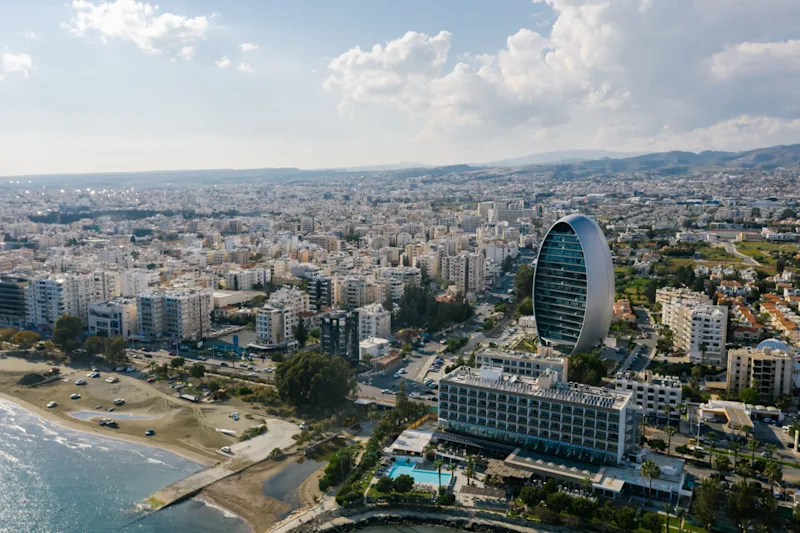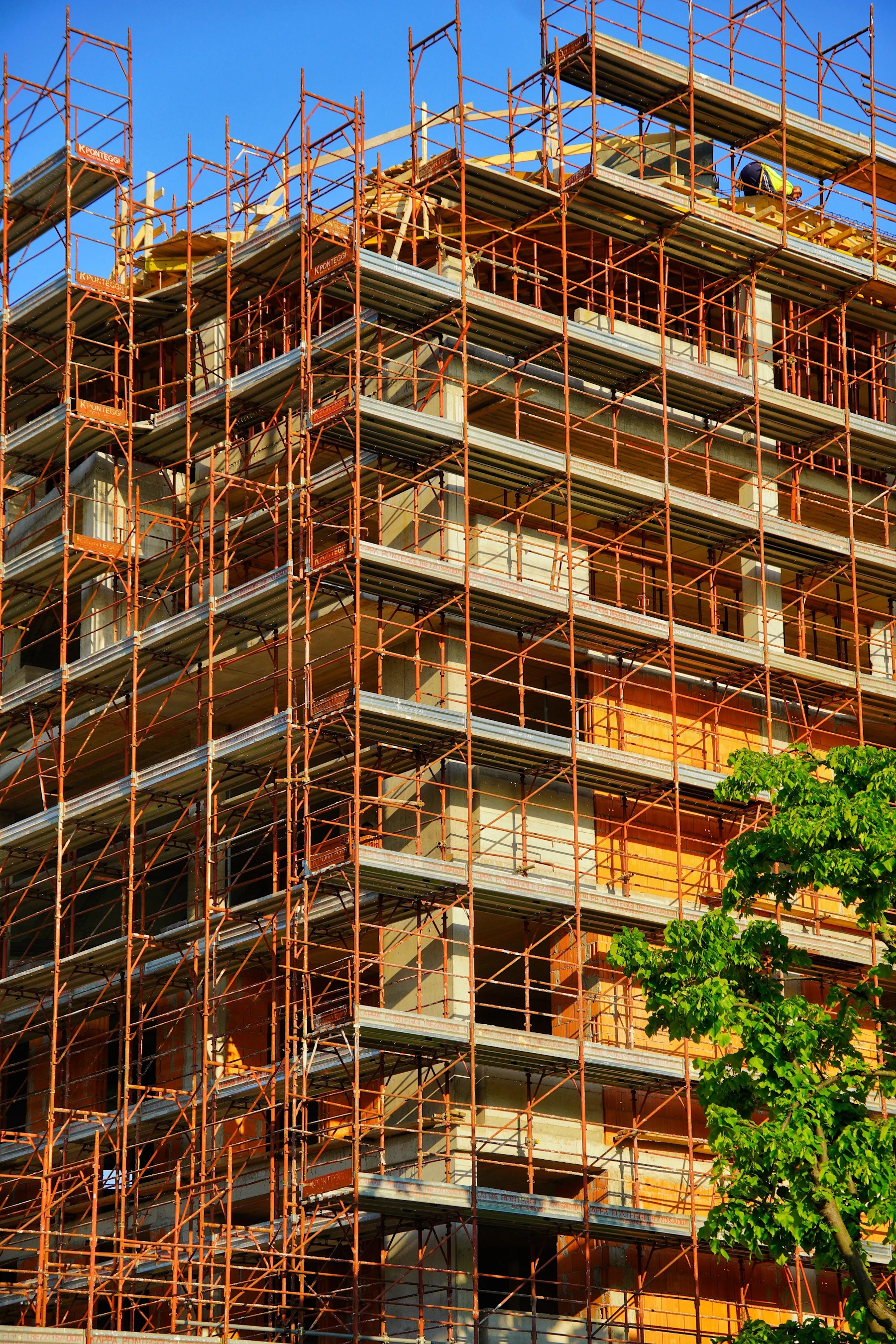
Cyprus's construction sector is entering an unusual phase: quieter on the cost charts, busier on the ground. Cranes have returned over Limassol and Nicosia, permits are moving faster than at any point since the pandemic, and government ministers are citing housing delivery as proof of a reform working as intended. The arithmetic facing developers, however, has not eased to match.
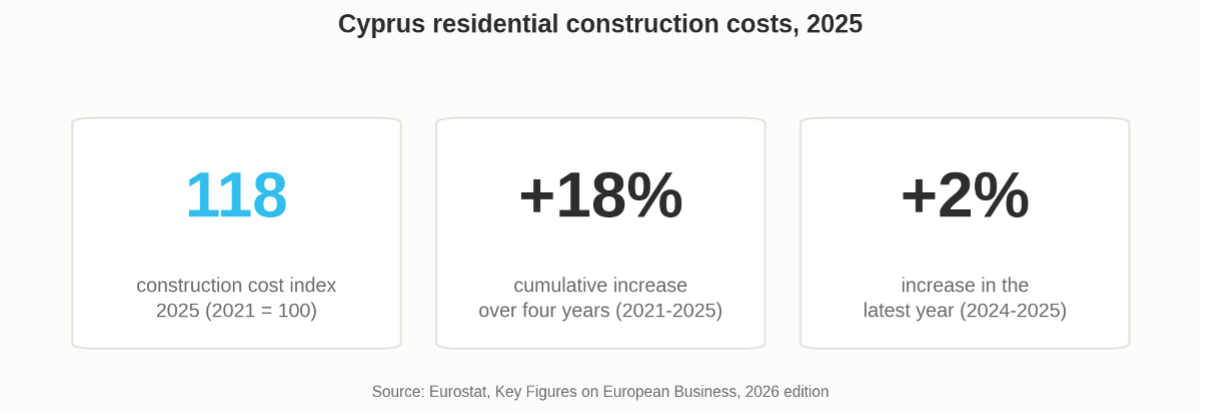
Cyprus residential construction costs closed 2025 at an index value of 118, up from a base of 100 in 2021, an increase of 18% over four years. The rise over the past year was limited to 2%, a genuine slowdown against the 11.7% increase recorded in 2022, the steepest annual rise Eurostat has tracked for Cyprus this decade.
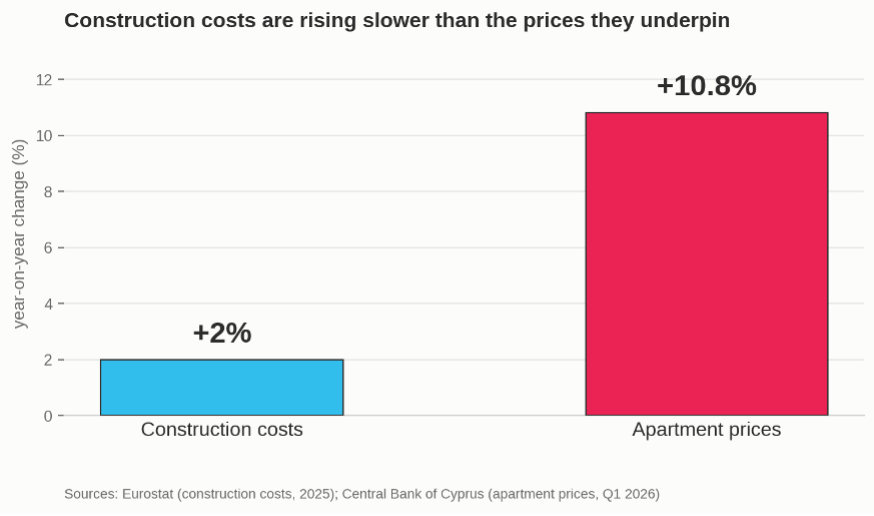
Despite slower growth, construction costs remain high. Apartment prices rose 10.8% year-on-year in the first quarter of 2026, with foreign buyer demand remaining strong. The government's licensing reform has fast-tracked approximately 3,000 residential units in 40 working days, good news for supply, but also a development that adds further pressure to already constrained resources: labour, specialist subcontractors, and materials.
The market is unlocking, costs remain high, and resources are finite. For project owners (individuals, companies, and investment funds), this translates into a specific risk. The difference between a profitable project and a marginal one no longer lies in the land price or in the negotiation of the construction contract. It lies in controlling costs across the full project lifecycle.
The pressure will not fall evenly. Projects already committed to fixed-price contracts, signed before the labour and materials squeeze tightened, carry the most exposure: their margins are fixed while their cost base is not. Schemes still at design stage have more room to adjust, provided that adjustment happens now, at the point where changing a layout or a specification costs a fraction of what changing it on site does.
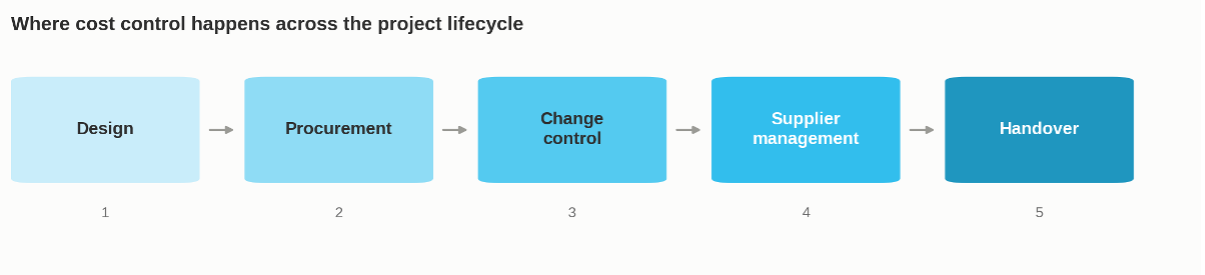
That control is a strategic matter, not an accounting one. It begins at design (layout decisions, material choices, standardisation) and continues through procurement, change control, supplier management, and real-time cost tracking. It is the work that happens before the project starts and continues through to handover.
Nothing in the data points to a reversal. The question for project owners is not how to avoid the cost. It is how to manage it.
Sources
- –
Eurostat, Key Figures on European Business, 2026 edition, construction cost index for new residential buildings, Cyprus.
- –
Central Bank of Cyprus, residential property price indices, Q1 2026.
- –
Statement by Interior Minister Constantinos Ioannou on approximately 3,000 residential units licensed in 40 working days.