Operational Readiness Management
A building can be complete and still not be ready for occupation.
That is the challenge Operational Readiness Management solves. It bridges the gap between construction completion and safe, confident, fully functioning day-one operations. Without it, projects reach handover with unresolved operational decisions, incomplete procedures, unclear responsibilities, untested workflows and FM gaps that quickly turn into disruption, delay and wasted cost.
At EEDN, we provide Operational Readiness Management to make sure facilities are not only built, but genuinely ready to operate. We coordinate the people, processes, assets, information and governance needed to move from project delivery into live use with control and confidence.
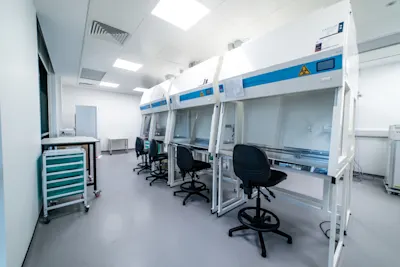
This is particularly valuable on technically demanding projects where a smooth transition matters as much as the build itself: laboratories, GMP environments, healthcare facilities, R&D space, complex fit-outs and operational estates where the cost of getting day one wrong is high.
Turning a finished project into a working operation
Operational readiness is a structured workstream that should shape decisions well before handover, not a final check at the end.
Design choices affect maintenance. Procurement affects mobilisation. User requirements affect equipment strategy, SOPs, FM scopes, staffing, training, logistics and compliance. If those threads are not pulled together early enough, a project can open with too many assumptions still unresolved.
Our role is to bring those threads together into one coordinated readiness programme. We help clients define what operationally needs to be true by opening day, identify the gaps, assign ownership and manage the route to readiness in a disciplined and visible way.
What we do
Our Operational Readiness Management service typically includes:
- –
defining the operational readiness strategy and the route from construction to live operation
- –
identifying gaps in the current operating model, asset strategy, FM structure and readiness planning
- –
translating user, FM and operator requirements into practical deliverables for the project team
- –
coordinating hard FM, soft FM, SOP, asset, maintenance and operational planning workstreams
- –
clarifying responsibilities across client, landlord, operator, design team and service providers
- –
preparing scopes and tender material for FM and operational support services where needed
- –
aligning design decisions with operational use, maintainability, compliance and lifecycle performance
- –
supporting training, mobilisation, commissioning, migration, occupancy and stabilisation planning
- –
establishing governance, reporting and decision-making rhythms for the readiness phase
More than handover
A handover is an event. Operational readiness is a process.
A project can technically complete while still being far from ready for use. Equipment may not be integrated, SOPs may not be aligned, FM scope may still be immature, training may be incomplete and responsibility boundaries may still be blurred. Good Operational Readiness Management deals with those issues before they become opening-day problems.
That is why we focus on the facility as a functioning environment, not just a completed asset. The building, the people, the systems, the procedures and the governance all need to come together in a way that is practical, maintainable and usable from day one.
Built for complex technical environments
Operational readiness becomes more demanding when the environment is regulated, specialist or operationally sensitive.
In laboratories, healthcare settings and GMP-adjacent spaces, readiness depends on more than occupation. It often involves equipment integration, qualification, maintenance strategy, HSE alignment, FM service definition, logistics planning and clear operational ownership. These are not minor add-ons. They are part of whether the facility can perform as intended.
That is where EEDN is particularly effective. We understand the overlap between technical delivery, stakeholder coordination and real operational use. We help clients avoid the common trap of treating readiness as something that can be solved late.
Why clients appoint EEDN
Clients appoint EEDN because operational readiness needs structure, leadership and practical judgement.
It needs someone who can see the live operational implications of project decisions, create momentum across different workstreams and keep readiness visible as a management issue rather than letting it disappear into fragmented actions across multiple teams.
Our approach is organised, hands-on and commercially aware. We create the governance, define the outputs, clarify who owns what and help make sure the facility reaches opening with fewer surprises and a clearer route into stable operation.
Ready for day one and beyond
Opening a new facility should not feel like stepping into uncertainty.
With proper Operational Readiness Management, the move from project to operation becomes more controlled, more transparent and far easier to manage. Risks are addressed earlier, responsibilities are clearer and the client has greater confidence that the facility can start well and continue to perform.